Results for Hemorrhoids

Hemorrhoids: Facts, Causes, and Treatments

December 15, 2016
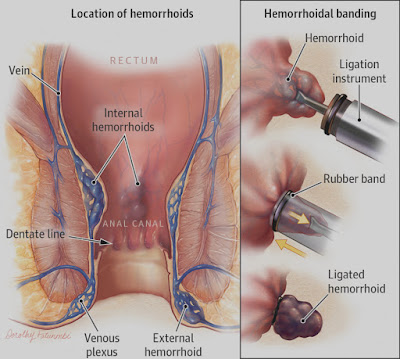
Hemorrhoids (or hemroids) are also known as piles. Although they can be extremely unpleasant and painful, they can be easily treated and are very preventable.

As hemorrhoids generally get worse over time, doctors suggest that they should be treated as soon as they appear.

It has been suggested that up to 75 percent of adults in Europe and North America will experience hemorrhoids at some point in their lives.
Approximately 50 percent of those people aged 50 years and over will require treatment. However, it is striking that only around 4 percent actually seek medical treatment.

Hemorrhoids are most common among adults aged 45-65. This does not mean, however, that young people and children do not get them. Hemorrhoids are much more common among men than women. A woman is most likely to get them when she is pregnant.                                                                                 

Causes of pile.                                                       
Constipation, too much carbohydrate, chronic diarrhea,
 lifting heavy weights, pregnancy or straining when passing a stool.         
The tendency to develop hemorrhoids may also be inherited. The risk of developing piles grows with age.14
                                                                                                                                                                                                                                                                                                                                                Symptoms of piles
In most cases piles are not serious and go away on their own after a few days.

An individual with piles may experience the following symptoms:

A hard lump may be felt around the anus. It consists of coagulated blood, called a thrombosed external hemorrhoid. This can bepainful.                                                           
After going to the toilet, a feeling that the bowels are still full                                                                 
Bright red blood after a bowel movement
Itchiness around the anus
 Mucus discharge when emptying the bowels
Pain while defecating
The area around the anus may be red and sore.                                                              

Treatments for piles
In the majority of cases, piles resolve on their own without the need for any treatment. Treatments can help significantly reduce the discomfort and itching that many patients experience.

A good doctor will initially recommend some lifestyle changes.

Diet - piles can be caused by too much straining when doing bowel movements, which is the result of constipation. A change in diet can help keep the stools regular and soft. This involves eating more fiber, such as fruit and vegetables, or switching your cereal breakfast to bran.16

Water is the best drink, and the patient may be advised to increase his/her water consumption. Some experts say too much caffeine is not good.

Body weight - if the patient is obese, losing weight may help reduce the incidence and severity of hemorrhoids.

Simple things you can do yourself to help prevent piles:

Try not to strain when you go to the toilet
Avoid laxatives
Exercise.

Ointments, creams, pads and other OTC medications - there are some over-the-counter (OTC) medications which help soothe the redness and swelling around the anus area. Some of them contain witch hazel, hydrocortisone, or some other active ingredient which can relieve symptoms of itching and pain.

It is important to remember that they do not cure piles, they only treat the symptoms. Do not use them for more than seven consecutive days - longer periods may irritate the anus area and cause skin thinning. Unless advised to by your doctor, do not use two or more medications simultaneously.

Painkillers - ask your pharmacist for suitable painkilling medications, such as acetaminophen (Tylenol).

Surgery - used for particularly large piles, or grades 3 or 4 hemorrhoids. Generally, surgery is used if other procedures were not effective. Sometimes surgery is done on an outpatient basis - the patient goes home after the procedure.

Hemorrhoid stapling - blood flow is blocked to the tissue of the hemorrhoid. This procedure is usually less painful than hemorrhoidectomy. However, there is a greater risk of hemorrhoid recurrence and rectal prolapse (part of the rectum pushes out of the anus).
Complications linked to piles

Anemia - hemorrhoids can sometimes cause long-term blood loss, which may lead to anemia.

Stangulated hemorrhoid - the blood supply to an internal hemorrhoid is cut off, causing severe pain, and even gangrene (death of tissue).

In other to be fully safe from try and error treatment and surgical operation, we strongly recommend OZEM Super Boost, a multi-purpose natural health drink.  

Hemorrhoids: Facts, Causes, and Treatments Hemorrhoids: Facts, Causes, and Treatments Reviewed by King Life on December 15, 2016 Rating: 5

What kills more people than AIDS, diabetes and road injuries?

March 27, 2014


What kills more people than AIDS, diabetes and road injuries?

This is very speculative.  Very WHO.  How do you sort out all causes of deaths worldwide?  Many studies of "illness" caused by pollution just asssume that pollution is the cause

Air pollution killed seven million people in 2012, more people than AIDS, diabetes and road injuries combined.
 diabetes
 diabetes

One in eight deaths worldwide can be attributed to breathing tainted air, making it the world’s largest environmental health risk, the Geneva-based World Health Organisation said in a report on Tuesday, today doubling its previous estimates for pollution fatalities.

The biggest culprit is poor ventilation of indoor heaters and cookers, the agency said.

The WHO revised the number because the deadly effect of air contaminants, which extends beyond respiratory problems to heart attacks, strokes and cancer, are now better understood. Low- and middle-income nations in Asia accounted for more than 70 per cent of deaths related to air contamination in 2012, the report shows.

‘‘Few risks have a greater impact on global health today than air pollution,’’ Maria Neira, director of the WHO’s department for public health, environmental and social determinants of health, said in a statement. ‘‘The evidence signals the need for concerted action to clean up the air we all breathe.’’

Indoor smoke killed about 4.3 million people and outdoor air pollution killed about 3.7 million in 2012, the WHO said.

There’s some overlap between deaths from indoor and outdoor factors, the agency said. The WHO previously estimated two million deaths in 2004 from indoor pollution and 1.3 million in 2008 from outdoor air contamination.

‘‘Poor women and children pay a heavy price from indoor air pollution since they spend more time at home breathing in smoke and soot from leaky coal and wood cook stoves,’’ Flavia Bustreo, the WHO’s assistant director-general for family, women and children’s health, said in the statement.

The new estimates show a stronger link between air pollution and cardiovascular disease such as stroke and heart ailments, in addition to the known connection with respiratory disease, according to the report.

Outdoor air pollution can cause lung cancer and increase the risk of bladder cancer, a World Health Organisation agency said in October, ranking it as a carcinogen for the first time.

Premature deaths and health problems from air pollution cost China as much as $US300 billion ($329.34 billion) a year, an official has found, report says, calling for a new urbanisation model for the world's second-largest economy.
AIDS, diabetes
AIDS, diabetes

"As China prepares for the next wave of urbanisation, addressing environmental and resource constraints will become increasingly more urgent because much of China's pollution is concentrated in its cities," said the joint report by the World Bank and the Development Research Centre of the State Council, China's cabinet.

High mortality levels and other health problems from China's notorious air pollution are estimated to cost the country from $US100 billion to more than $US300 billion a year, said the report, which was 14 months in the making.

Writing in the Lancet in December, former Chinese health minister Chen Zhu cited studies showing air pollution caused up to 500,000 premature deaths a year in China.

Tuesday's report said the long-term consequences could include birth defects and impaired cognitive functions because young children and infants are severely affected by poor air quality.

China's rapid urbanisation over the last three decades -  a key part of its economic boom - has avoided some common ills such as large-scale slums and unemployment, the report said.

"But strains have begun to emerge in the form of rising inequality, environmental degradation, and the quickening depletion of natural resources," it said.

Much of the new urban land was taken from farmers at prices often no more than 20 per cent of market values, and the amount of available farmland is now close to the minimum level necessary to ensure food security, said the report.

If current trends continue, an additional 34,000 square kilometres - an area about the size of the Netherlands - will be needed to accommodate the growth of cities in the next decade, it added.

China needs to reform the way it expands its cities and curb inefficient urban sprawl, which has sometimes produced ghost towns and wasteful property development, the report said.

On current trends China will spend $US5.3 trillion on urbanisation over the next 15 years - but with more efficient, denser cities the country could save about $US1.4 trillion, or 15 per cent of its gross domestic product last year, World Bank managing director Sri Mulyani Indrawati told a conference in Beijing on Tuesday.

The report proposed six areas for reform including more efficient land management that better benefits farmers, and adjustments to the "hukou" residence registration system to give migrant workers equal access to basic public services.

It also called on Beijing to step up its law enforcement on pollution.

China's Premier Li Keqiang vowed to "declare war" on pollution at the country's annual legislative gathering this month, and announced new measures to add to a raft of others issued over the past year.

SOURCE


Alzheimer's Disease risk may begin in the womb

If you are a  mouse

A pregnant mother's eating habits may influence her unborn child's chances of developing Alzheimer's, new research has suggested.

Scientists found that offspring of mice fed a high-fat diet were more likely as adults to experience impaired blood flow in the brain, a feature linked to the disease.

When the offspring were also fed a high-fat diet their brains became less able to rid themselves of harmful amyloid protein, which accumulates in sticky tangles in the brains of Alzheimer's patients.

More work is needed but the study could have important implications for humans, the researchers believe.

Lead scientist Dr Cheryl Hawkes, from the University of Southampton, said: "Our preliminary findings suggest that mothers' diets during pregnancy may have long-term effects on their children's brains and vascular health.

"We still need to do more work to understand how our findings translate to humans, but we have known for some time that protecting mothers' health during pregnancy can help lower the risk of health problems for their children.

"Our next step will be to investigate how our findings could relate to Alzheimer's disease in people. We hope these results could provide a new lead for research to understand how to prevent the disease."

The research was presented at the Alzheimer's Research UK conference taking place in Oxford this week.

Dr Eric Karran, director of research at the charity, which funded the study, said: "It's important to remember that this research is in mice, but these results add to existing evidence suggesting that the risk of Alzheimer's disease in later life is affected by our health earlier in life.

"This study goes one step further by suggesting that what happens in the womb may also be important. We're pleased to have funded this research, which has shed new light on the complex picture of Alzheimer's risk.

"Alzheimer's is a complicated disease and it's likely that our risk is affected by a number of different genetic and environmental factors.

"Research to understand these factors can help equip us to take steps to prevent the disease, but in the meantime, evidence suggests we can lower our risk by eating a healthy, balanced diet, doing regular exercise, not smoking and keeping our blood pressure and weight in check."

SOURCE


What kills more people than AIDS, diabetes and road injuries?  What kills more people than AIDS, diabetes and road injuries? Reviewed by King Life on March 27, 2014 Rating: 5

Drink tequila, lose weight? How sugars found in the Mexican spirit have 'tremendous' potential to fight obesity

March 26, 2014

Drink tequila, lose weight? How sugars found in the Mexican spirit have 'tremendous' potential to fight obesity

If you are a mouse

The sugar that gives tequila its kick could also help us stay slim.  Researchers say the plant sugars that are fermented to create the Mexican spirit hold ‘tremendous’ potential in the battle of the bulge.

Tests show the sugars from the cactus-like agave plant (which are not the same as in the more commonly known agave syrup) raise levels of a gut hormone that tells the brain it is time to stop eating.  The hormone also keeps food the stomach for longer, enhancing the feeling of fullness.
lose weight
lose weight

If that wasn’t enough, the slightly-sweet tasting sugars known as agavins aren't processed by the body – meaning they can’t make us fat.

The lack of absorption by the body also means they should be free of headaches and other side-effects that artificial sweeteners can cause.

Mice given water laced with agavins ate less and lost more weight than animals given water containing artificial sweeteners.

Their blood glucose levels also fell, suggesting that the sweetener could also be useful for diabetics, said researchers at the National Meeting of the American Chemical Society in Dallas.

Mexican researcher Mercedes López said agavins are in a ‘tremendous position for consumption by diabetics and the obese’.   He added: 'We believe agavins have a great potential as a light sweetener.'

Previous research suggests they also strengthen the bones.

Unfortunately, agavins lose their health-boosting properties when processed – meaning drinking tequila won’t have the same effect

SOURCE


'Astonishing' new cancer drug could extend the lives of terminally-ill patients and eliminate their symptoms overnight....with virtually no side effects

A new version of an old strategy.  Looks promising

A new ‘miracle’ pill which could extend the lives of terminally-ill cancer patients and eliminate their symptoms overnight is being trialled by British researchers.

The medicine, which is said to have virtually no side effects, is taken in a single dose every morning and effectively switches off the mechanisms of leukaemia and lymphoma.

Unlike traditional forms of treatment like chemotherapy and radiotherapy, it has none of the debilitating side effects such as hair loss, tiredness and sickness.

Cancer patients at Derriford Hospital in Plymouth, Devon, were the first in the world to trial the new drug, which is a new class of Bruton's Tyrosine Kinase (BTK) inhibiting drugs.

They said the breakthrough treatment left them feeling better immediately and has had no side effects to date.

One terminally ill man given just months to live before the trials says he's ‘fighting fit’ - more than a year-and-a-half later.

The world-first project is being led by Professor Simon Rule, a globally-renowned expert in haematology and researcher at Plymouth University Peninsula Schools of Medicine and Dentistry.

He says the new pill has the potential to transform the lives of desperately ill patients and eliminate the need for costly, gruelling bouts of chemotherapy.

Professor Rule said: ‘The astonishing thing about these drugs is that they have virtually no side effects, which is unprecedented from my experience. In some patients the effects are immediate.

‘Patients with lots of symptoms, particularly those with lymphoma, will feel better the next day after taking the medication.’

Current cancer therapies, such as chemotherapy, intensive chemo-immunotherapy, or stem cell transplants are effective but patients frequently relapse and eventually run out of further options.

The new oral pill works by blocking a protein which causes growth in cancerous cells which in turn caused the infected cells to die and leaves healthy cells unaffected.

The drug was first trialled on David Hodge, 74, from Plymouth, Devon, who has battled chronic lymphocytic leukaemia for 17 years.

Mr Hodge was given months to live because his immune system was so badly damaged and had become resistant to all other treatments.

He spent the first night of the trial in hospital before returning for regular check-ups over the subsequent 20 months.

He said: ‘I think with any new trial or drug, or with chemotherapy there's a little bit of trepidation but I'm a Christian and I prayed about this and I got great peace about it.

‘Even if it proves at this moment to be of little use to me, I trust that with fine tuning it will prove to be significant to those taking the drug later on.

‘It's just like, well it's better than taking paracetamol. I take the medication first thing in the morning at 6 o'clock and then go back to bed for an hour.

‘Afterwards I get up and get on with my day; I'm fighting fit. I've had no problems, no side effects, nothing.’

The next phase of Professor Rule's study will see BTK trialled against standard chemotherapy to see if it can become a viable long-term replacement.

He said: ‘This will completely change the way we manage these diseases. We have access to the next generation of the drug to be part of the next trial phases.

‘This is not a cure for cancer but it will mean we are significantly improving our patients' life expectancy and quality of life; similar to managing a chronic condition.

‘I have yet to come across another class of drugs in my career that has been so successful for leukaemia or lymphoma.

‘I have done a lot of drug trials in my career, this drug and its predecessor, which I was fortunate to be the first person in Europe to use - they are transformational as far as I am concerned.

‘Normally, what you expect with trials like this is that you treat a patient for a period of time and often what happens is the drug doesn't work.

‘The side effects make you stop the trial or the disease doesn't respond for very long. What is very exciting about this drug is the effects are continuing and there are no emerging side effects.

‘The next stage will be chemo-free treatment. We've been talking about it for years and now it might be a reality.

‘This has the very real prospect of changing the management of these difficult forms of cancer.'

SOURCE


Drink tequila, lose weight? How sugars found in the Mexican spirit have 'tremendous' potential to fight obesity Drink tequila, lose weight? How sugars found in the Mexican spirit have 'tremendous' potential to fight obesity Reviewed by King Life on March 26, 2014 Rating: 5
Powered by Blogger.